0%
Reading Progress
Scroll to track your progress
“Don’t ignore the pain that travels—understanding sciatica can help you move better and live better.”
What Is Sciatica?
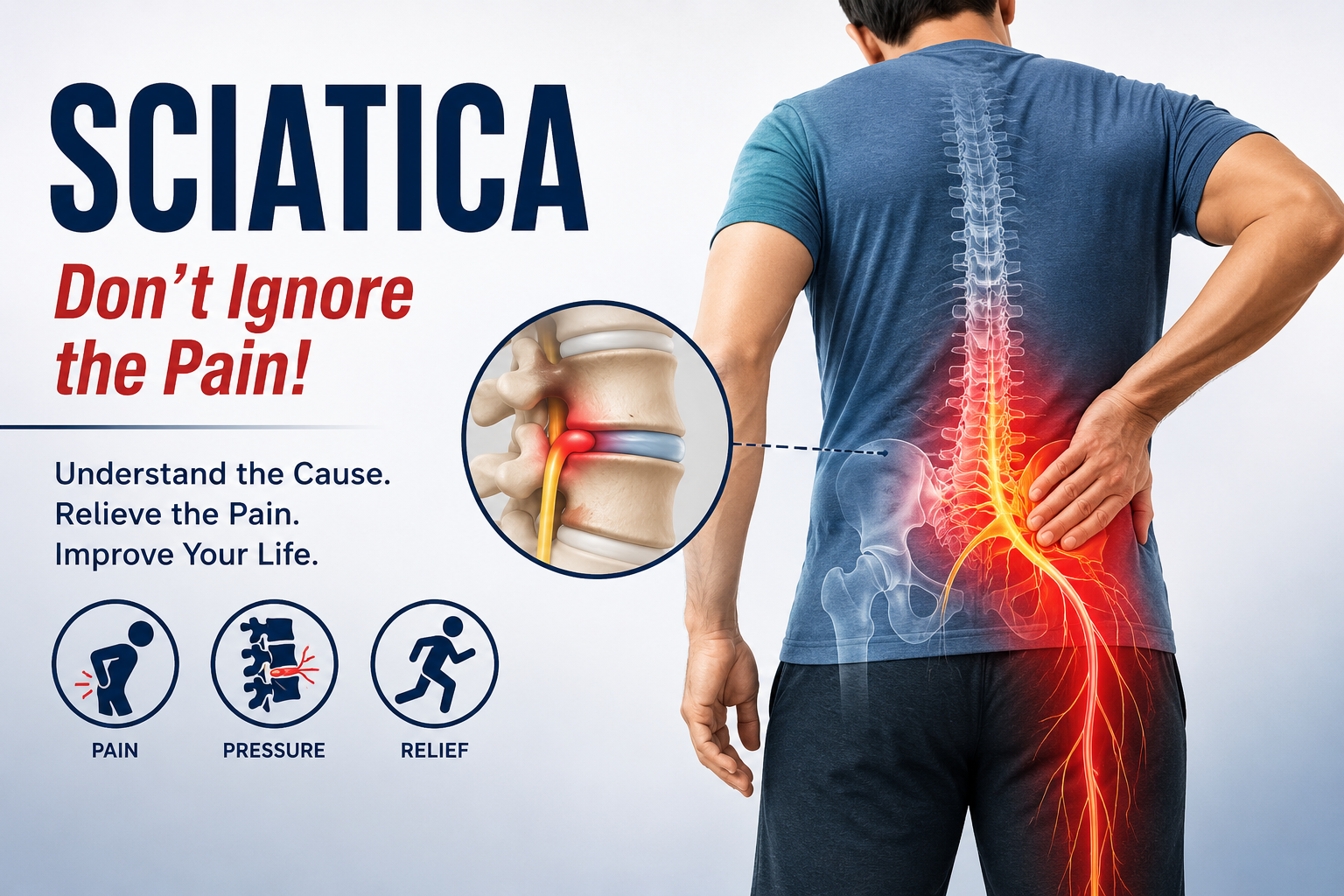
Sciatica is caused by irritation, compression of the sciatic nerve, which is the largest nerve in the body. The sciatic nerve runs from the lower back through the hips and buttocks and down each leg.
Sciatica usually affects one side of the body and can cause pain that travels from the lower back or buttock into the thigh and leg.
What Causes Sciatica?
Common causes include:
Herniated or slipped disc – a disc may press on the sciatic nerve.
Spinal stenosis – narrowing of the spinal canal can compress nerves.
Spondylolisthesis – one vertebra slips forward over another.
Bone spurs – extra bone growth can put pressure on the nerve.
Muscle-related irritation – tight or inflamed muscles around the buttock may sometimes irritate the sciatic nerve.
What Are the Symptoms of Sciatica?
Symptoms may include:
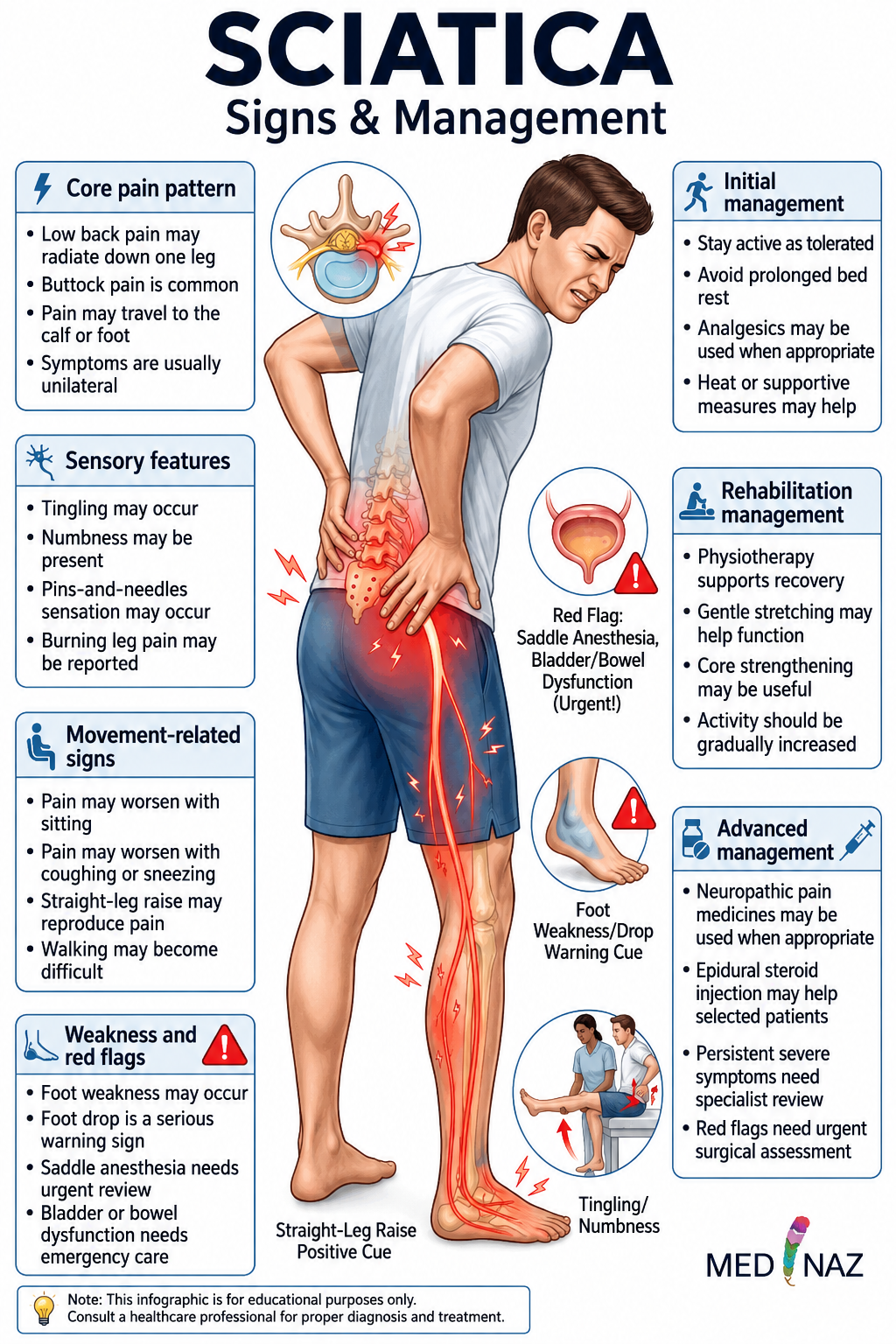
Pain in the lower back, buttock, or leg
Sharp, burning, or shooting pain
Tingling sensation
Numbness in the leg or foot
Muscle weakness in the affected leg
Pain that worsens with prolonged sitting, coughing, or sneezing
Who Is More Likely to Develop Sciatica?
The risk may increase with:
Increasing age
Prolonged sitting or inactivity
being overweight
Poor posture
Physically demanding work
Repeated lifting or twisting
Certain spinal conditions
How Is Sciatica Diagnosed?
A healthcare professional usually begins with a medical history and physical examination. They may assess muscle strength, sensation, reflexes, and leg movement.
Imaging tests such as MRI or CT scans may be recommended when symptoms are severe, persistent, or when a specific spinal problem is suspected.
How Is Sciatica Treated?
Treatment depends on the underlying cause and severity. It may include:
Maintaining appropriate daily activity and avoiding prolonged bed rest
Physiotherapy and stretching exercises
Medicines for pain when prescribed
Exercises to strengthen the back and core muscles
Heat or cold therapy for symptom relief
In selected cases, injections may be considered
Surgery may be recommended in certain patients with significant nerve compression, persistent symptoms, or progressive weakness
Can Sciatica Be Prevented?
Although sciatica cannot always be prevented, the risk may be reduced by:
Maintaining a healthy body weight
Staying physically active
Strengthening the core and back muscles
Maintaining good posture
Using proper lifting techniques
Avoiding prolonged sitting
Taking regular movement breaks
When Should You Seek Medical Attention?
Consult a healthcare professional if leg or back pain is severe, persistent, recurrent, or associated with numbness or weakness.
Seek urgent medical attention if back pain is accompanied by new difficulty controlling urination or bowel movements, numbness around the genital or anal area, or severe/progressive weakness in the legs. These can be signs of serious nerve compression.
Does sciatica always require surgery?
No. Most people with sciatica do not require surgery. Surgery is generally considered when conservative treatment does not provide adequate relief or when significant neurological problems develop.
Conclusion
Sciatica can interfere with walking, sitting, working, and everyday activities, but many cases can improve with appropriate treatment and physical rehabilitation. Recognizing symptoms early and seeking professional evaluation can help identify the cause and guide effective treatment.
AI Generated
Verified and approved by
Ms.Siddiq nisha U. B.Sc (Nursing)
Dr.Karthikeyan S. MBBS.,