0%
Reading Progress
Scroll to track your progress
High Cholesterol (Hyperlipidemia)
What Is High Cholesterol?
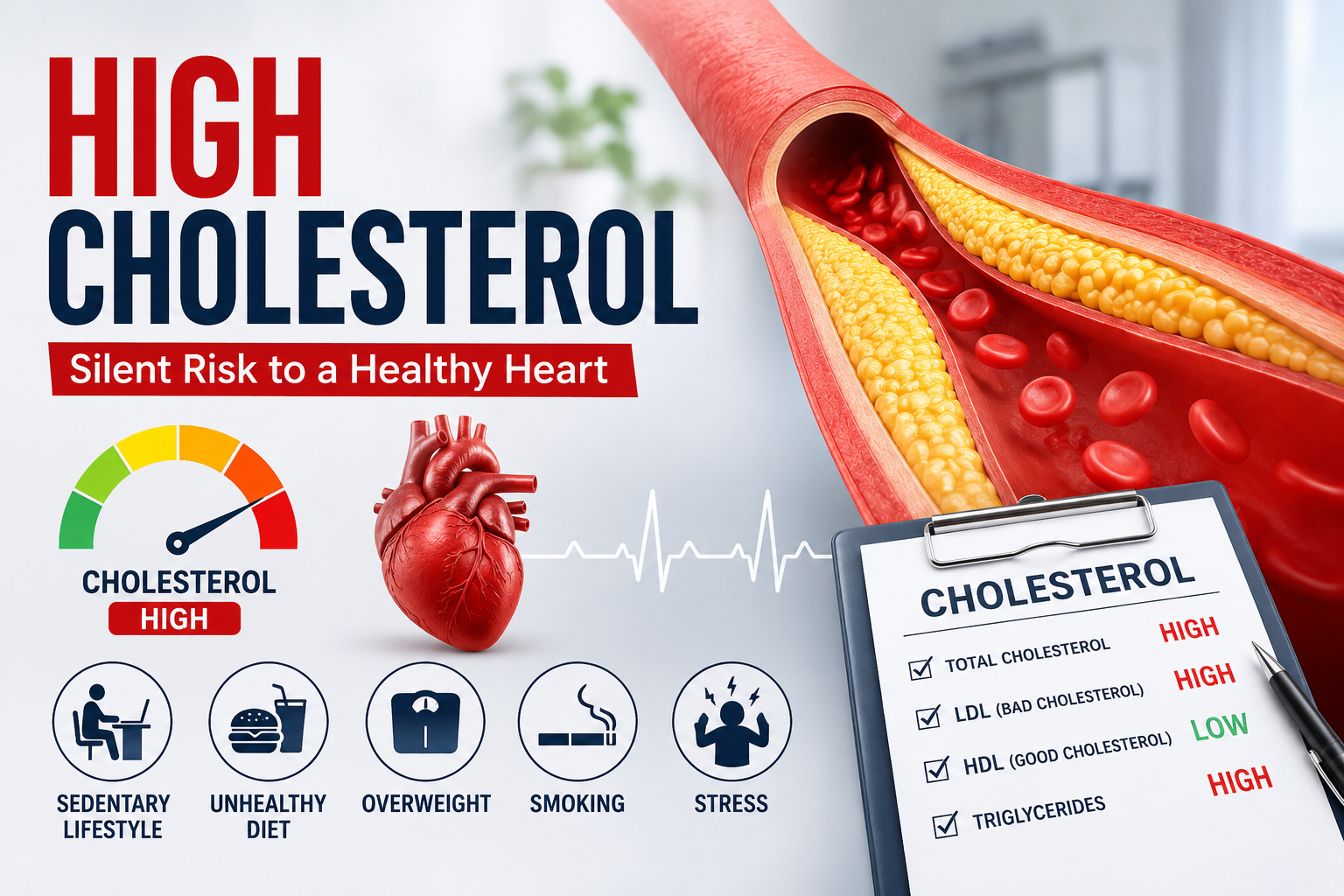
High cholesterol (hyperlipidemia) is a condition where you have too much of a fat-like substance in your blood. Excess cholesterol can build up as hard plaque inside your arteries, narrowing them and raising your risk for dangerous heart problems and stroke.
What Are the Types of Cholesterol?
- LDL Cholesterol
LDL, or low-density lipoprotein, is commonly called “bad cholesterol.” High LDL levels can contribute to plaque buildup inside arteries.
- HDL Cholesterol
HDL, or high-density lipoprotein, is known as “good cholesterol.” It helps transport excess cholesterol back to the liver for processing and removal.
- Triglycerides
Triglycerides are another type of fat found in the blood. High triglyceride levels can increase cardiovascular risk, particularly when combined with other abnormal cholesterol levels.
What Causes High Cholesterol?
Common causes include:
- Diet high in saturated and trans fats
- Being overweight or obese
- Physical inactivity
- Smoking
- Excessive alcohol consumption
- Family history of high cholesterol
- Diabetes
- Thyroid disorders
- Kidney or liver conditions
- Certain medications
- Genetic conditions such as familial hypercholesterolemia
What Are the Symptoms of High Cholesterol?
High cholesterol usually does not cause noticeable symptoms. Many people discover they have high cholesterol only after a blood test.
When cholesterol remains high for a long time, it can contribute to plaque buildup in the arteries and increase the risk of complications such as heart attack and stroke.
What Are the Risks of High Cholesterol?
If high cholesterol remains untreated, cholesterol-containing plaque can accumulate inside the arteries. This process, called atherosclerosis, can narrow or block blood vessels and increase the risk of:
Coronary artery disease
Heart attack
Stroke
Peripheral artery disease
How Is High Cholesterol Diagnosed?
High cholesterol is diagnosed using a lipid profile (lipid panel) blood test. It generally measures:
- Total cholesterol Less than 200 mg/dL
- LDL cholesterol Less than 100 mg/dL
- HDL cholesterol 40 mg/dL+ for men, 50 mg/dL+ for women (Higher is better to protect the heart)
- Triglycerides Less than 150 mg/dL
Your healthcare professional will interpret these results along with your age, medical history, family history, and other cardiovascular risk factors.
How Can High Cholesterol Be Managed?
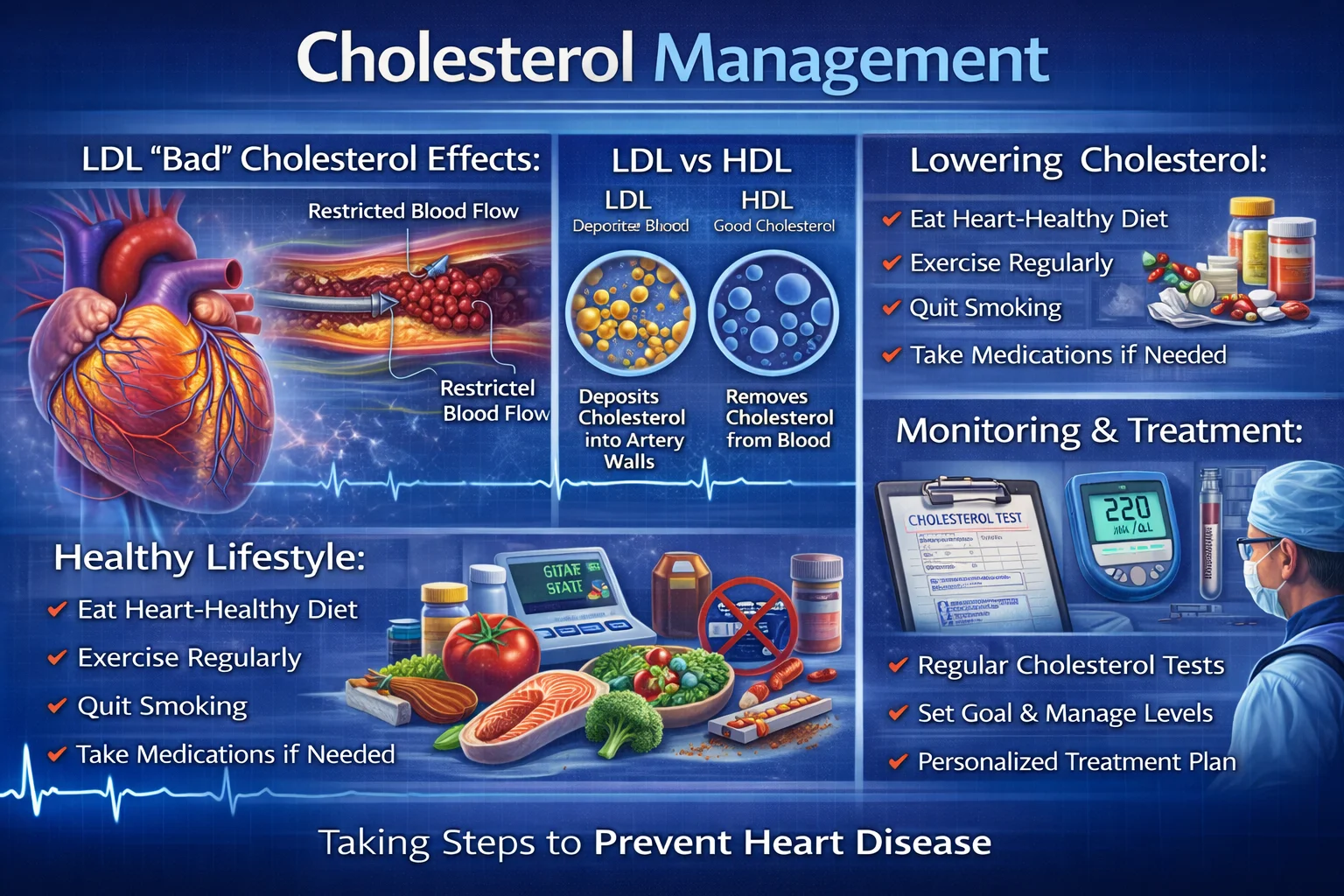
Treatment depends on your cholesterol levels and overall cardiovascular risk. Lifestyle changes may include:
1. Eat a Heart-Healthy Diet
Choose more vegetables, fruits, whole grains, legumes, nuts, seeds, and other high-fibre foods. Limit foods high in saturated and trans fats.
2. Exercise Regularly
Regular physical activity can help improve cholesterol levels and support a healthy weight.
3. Maintain a Healthy Weight
If you are overweight, even modest weight loss can improve cholesterol and other cardiovascular risk factors.
4. Avoid Smoking
Quitting smoking improves cardiovascular health and reduces the overall risk of heart disease.
5. Limit Alcohol
Excessive alcohol intake can raise triglyceride levels and contribute to other health problems.
6. Take Medicines When Prescribed
Some people require cholesterol-lowering medicines, such as statins. Never start, stop, or change cholesterol medication without consulting your healthcare professional.
How often should cholesterol be checked?
The frequency depends on age, health status, family history, previous cholesterol results, and other risk factors. Your healthcare professional can recommend an appropriate testing schedule.
Conclusion
High cholesterol and hyperlipidemia are common conditions that can often be managed effectively through healthy lifestyle habits and, when necessary, medication. Since high cholesterol usually has no symptoms, regular screening and early management are important for reducing the risk of heart disease and stroke.
AI Generated
Verified and approved by
Ms.Siddiq nisha U. B.Sc (Nsg)
Dr.Karthikeyan S. MBBS.,