0%
Reading Progress
Scroll to track your progress
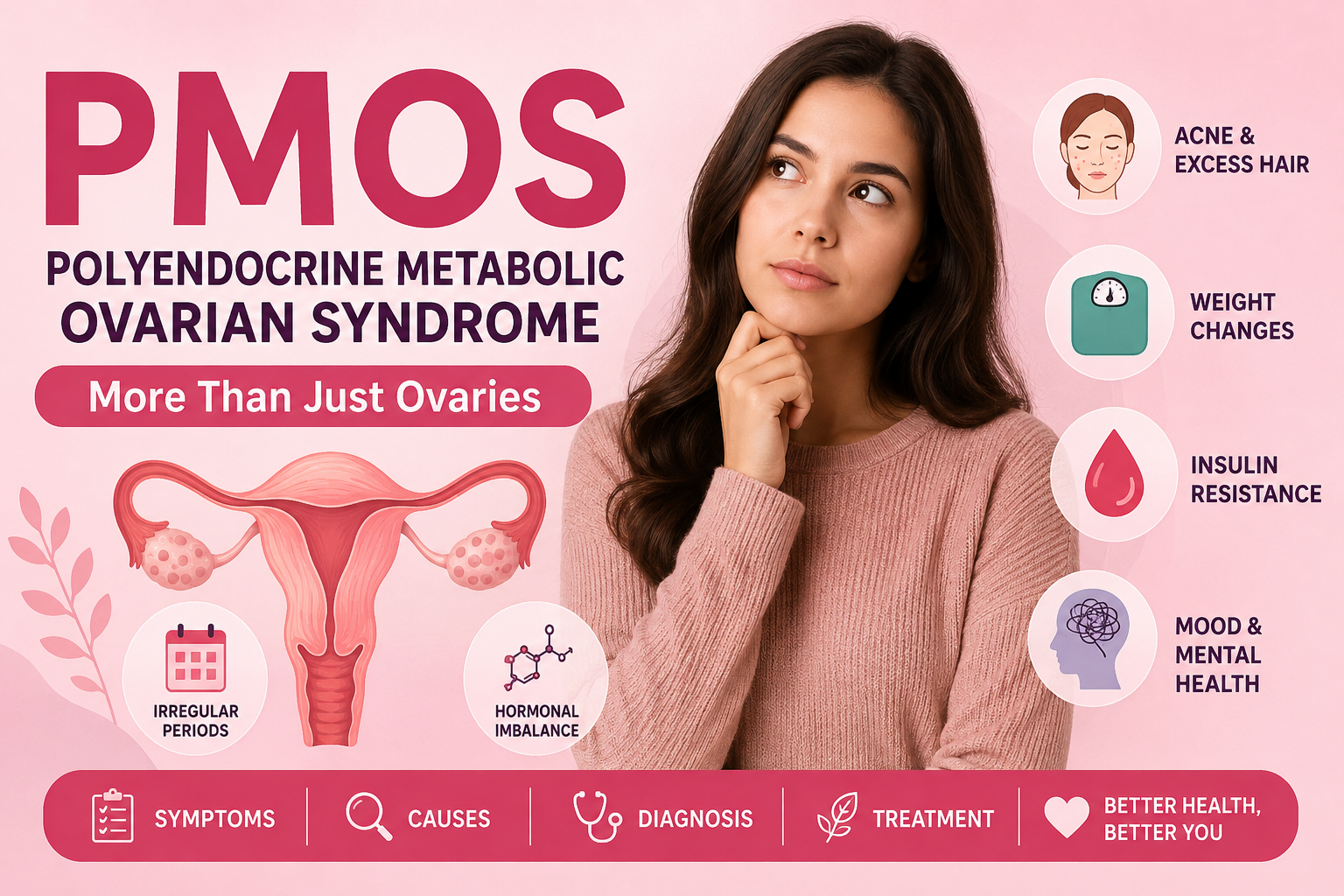
"PMOS is more than an ovarian condition—it is a complex hormonal and metabolic condition that can affect overall health.”
What Is PMOS?
Polyendocrine Metabolic Ovarian Syndrome (PMOS) is the new name for the condition previously known as Polycystic Ovary Syndrome (PCOS). PMOS is a common, complex hormonal and metabolic condition that can affect menstrual cycles, ovulation, fertility, skin, hair, weight, metabolism and psychological well-being. It may also increase the risk of certain long-term health problems.
Why Was PCOS Renamed PMOS?
The previous name, “Polycystic Ovary Syndrome,” could make people think that the condition is mainly caused by ovarian cysts. However, the condition is much broader than ovarian findings.
Not everyone with PMOS has polycystic-appearing ovaries, and the condition can affect several systems of the body. The new name highlights its hormonal (endocrine), metabolic and ovarian components.
The name change followed an international process involving patient and professional organizations worldwide, with patients playing an important role in the development of the new terminology.
What Does PMOS Stand For?
- P – Polyendocrine: Highlights the involvement of hormonal systems.
- M – Metabolic: Reflects metabolic features and associated health risks.
- O – Ovarian: Recognizes its effects on ovarian function and ovulation.
- S – Syndrome: Refers to a collection of related signs and symptoms.
Causes of PMOS
There is no single cause of PMOS. It is thought to result from a combination of genetic, hormonal and metabolic factors.
Important factors may include:
- Insulin resistance
- Increased androgen activity
- Hormonal imbalance
- Genetic predisposition
- Metabolic factors
- Environmental and lifestyle factors
- The exact mechanisms can vary from person to person.
What Are the Symptoms of PMOS?
Symptoms can differ significantly between individuals. Common symptoms include:
- Irregular menstrual periods
- Missed or infrequent periods
- Irregular ovulation
- Difficulty becoming pregnant
- Excess facial or body hair
- Acne
- Oily skin
- Hair thinning or hair loss
- Weight gain or difficulty losing weight
- Changes in blood sugar or insulin metabolism
- Mood and psychological symptoms
- Not everyone with PMOS experiences all these symptoms.
Does PMOS Mean There Are Ovarian Cysts?
No. The name “polycystic” can be misleading. The ovaries may show multiple small follicles on ultrasound, but these are not necessarily conventional ovarian cysts.
Furthermore, polycystic ovarian morphology is not required in every adult diagnosis. Diagnosis is based on the overall clinical picture.
How Is PMOS Diagnosed?
Diagnosis involves a detailed medical history, physical examination and appropriate laboratory investigations. Ultrasound or other tests may be used when necessary.
For adults, the diagnostic framework considers three major features:
Hyperandrogenism – clinical or biochemical evidence of increased androgen activity.
Ovulatory dysfunction – irregular or absent ovulation.
Polycystic ovarian morphology on ultrasound, with anti-Mullerian hormone (AMH) being an alternative to ultrasound in adults under current guidelines.
Other conditions that can cause similar symptoms need to be excluded.
PMOS and Fertility
PMOS can affect fertility because hormonal changes may interfere with regular ovulation.
However, PMOS does not mean infertility.
Many women with PMOS can become pregnant naturally or with appropriate medical treatment and fertility support.
PMOS and Metabolic Health
One of the important reasons for the new terminology is recognition of the metabolic aspects of the condition.
People with PMOS may have an increased risk of:
- Insulin resistance
- Prediabetes
- Type 2 diabetes
- Abnormal cholesterol levels
- Cardiovascular risk factors
- Sleep-related disorders
- The level of risk varies between individuals, so appropriate screening and follow-up are important.
Can PMOS Affect Mental Health?
Yes. Psychological symptoms can be an important part of PMOS.
Some people may experience:
- Anxiety
- Depression
- Reduced quality of life
- Body-image concerns
- Emotional distress
- Mental well-being should therefore be considered as part of comprehensive PMOS care.
How Is PMOS Treated?
There is no single treatment suitable for everyone. Management depends on symptoms, metabolic health and whether
pregnancy is desired.
Treatment may include:
1. Healthy Lifestyle
A balanced diet, regular physical activity, adequate sleep and sustainable lifestyle habits can support metabolic and overall health.
2. Menstrual Cycle Management
Medications may be prescribed to regulate menstrual cycles and protect the uterine lining when appropriate.
3. Management of Androgen-Related Symptoms
Acne, excess hair growth and hair thinning can be managed with appropriate medical and cosmetic treatments.
4. Fertility Treatment
For people trying to conceive, treatment may focus on improving ovulation and fertility according to individual needs.
5. Metabolic Risk Management
Blood glucose, cholesterol, blood pressure and other metabolic risk factors may need regular assessment.
Can PMOS Be Cured?
There is currently no single permanent cure for PMOS. However, symptoms and associated health risks can often be effectively managed. Long-term, individualized care can help improve menstrual health, fertility, metabolic health and quality of life.
Frequently Asked Questions
Is PMOS the same as PCOS?
Yes. PMOS is the new name for the condition previously called PCOS. The terminology has changed to better represent the broader hormonal and metabolic nature of the condition.
Do all women with PMOS have polycystic ovaries?
No. Polycystic ovarian morphology is not present in every person with PMOS and is not the only basis for diagnosis.
Can women with normal weight have PMOS?
Yes. PMOS can occur in people with different body sizes.
Can PMOS cause infertility?
PMOS can cause irregular ovulation and may make conception more difficult, but it does not mean that pregnancy is impossible.
Is PMOS only a reproductive disorder?
No. PMOS can involve reproductive, hormonal, metabolic and psychological health.
Conclusion
Polyendocrine Metabolic Ovarian Syndrome (PMOS) represents a broader understanding of the condition previously known as PCOS.
The change in terminology moves the focus away from the misconception that the condition is simply about ovarian cysts and highlights its hormonal, metabolic and reproductive effects.
Early recognition, appropriate investigations, individualized treatment and long-term follow-up can help people with PMOS manage symptoms and reduce associated health risks.
If you have irregular periods, excess hair growth, acne, difficulty conceiving or concerns about metabolic health, consult a qualified healthcare professional for an appropriate evaluation.
AI Generated
Verified and approved by
Ms.Siddiq nisha U. B.Sc(Nsg)
Dr.Karthikeyan S. MBBS.,