0%
Reading Progress
Scroll to track your progress
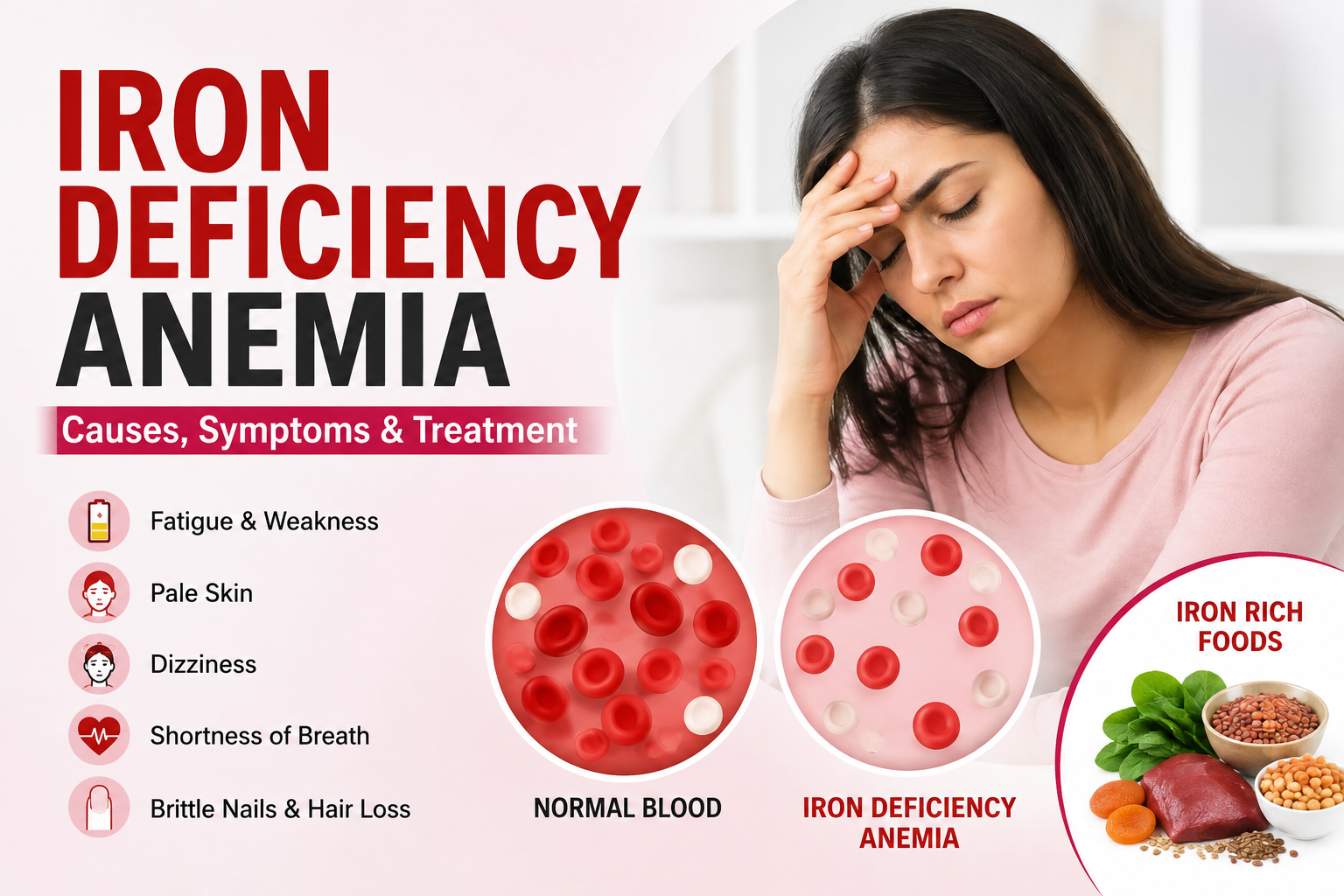
Introduction Iron deficiency anemia is one of the most common types of anemia. It occurs when the body does not have enough iron to produce adequate hemoglobin. Hemoglobin is a protein in red blood cells that carries oxygen throughout the body. When iron levels are low, the body may not receive enough oxygen, leading to tiredness, weakness and other symptoms.
What is Iron Deficiency Anemia?
Iron deficiency anemia develops when the body's iron stores are too low to produce enough healthy red blood cells. It can affect people of all ages but is particularly common in women, children and people with certain medical conditions.
What Causes Iron Deficiency Anemia?
Common causes include:
Inadequate iron intake through diet
Heavy menstrual bleeding
Pregnancy, due to increased iron requirements
Blood loss from the stomach or intestines
Certain gastrointestinal conditions that affect iron absorption
Frequent blood donation
Increased iron requirements during childhood and adolescence
What Are the Symptoms?
Mild iron deficiency may not cause noticeable symptoms. As anemia becomes more severe, symptoms may include:
Persistent tiredness and weakness
Pale skin
Dizziness or headache
Shortness of breath
Fast or irregular heartbeat
Cold hands and feet
Difficulty concentrating
Brittle nails or hair loss
Craving non-food items such as ice, known as pica
Who Is at Higher Risk?
People who may have a higher risk include:
Women with heavy menstrual periods
Pregnant women
Infants and children
Adolescents
People following diets low in iron
Frequent blood donors
People with conditions affecting the digestive system
How Is Iron Deficiency Anemia Diagnosed?
A doctor may recommend blood tests to determine whether anemia is present and identify its cause. Common tests include:
Complete Blood Count (CBC)
Hemoglobin level
Serum ferritin
Serum iron
Total Iron-Binding Capacity (TIBC)
Transferrin saturation
Additional tests may be recommended when blood loss or another underlying condition is suspected.
How Is Iron Deficiency Anemia Treated?
Treatment depends on the severity and underlying cause. It may include:
1. Iron-Rich Diet
Foods containing iron include:
Green leafy vegetables
Beans and lentils
Chickpeas
Soybeans and soy products
Nuts and seeds
Eggs
Meat, poultry and fish
Iron-fortified foods
Taking vitamin C-rich foods such as oranges, guava, tomatoes and amla along with iron-rich foods can help improve iron absorption.
2. Iron Supplements
Doctors may prescribe oral iron supplements when dietary changes alone are not enough. The dose and duration depend on the individual's iron levels and underlying cause.
3. Treating the Underlying Cause
If anemia is caused by heavy menstrual bleeding, gastrointestinal blood loss or poor iron absorption, treating the underlying problem is an important part of recovery.
In some cases, intravenous (IV) iron may be recommended when oral iron is not tolerated, is not adequately absorbed or when rapid replacement is needed.
Can Iron Deficiency Anemia Be Prevented?
A balanced diet containing adequate iron can help prevent iron deficiency. People with increased iron requirements may need additional supplementation under medical supervision.
Do not take high-dose iron supplements without medical advice, as excess iron can also be harmful.
Frequently Asked Questions
Is iron deficiency anemia serious?
It can range from mild to severe. Untreated anemia can affect energy levels, concentration and physical functioning. Severe anemia may require prompt medical attention.
Can iron deficiency cause hair loss?
Yes. Significant iron deficiency may contribute to hair shedding in some people.
How long does it take to recover from iron deficiency anemia?
Recovery depends on the severity and cause. Hemoglobin may improve within weeks after appropriate treatment, but rebuilding the body's iron stores can take several months.
Can I get enough iron from food?
Some people can maintain adequate iron levels through a balanced diet, while others may require supplements because of blood loss, increased requirements or absorption problems.
Should I take iron tablets without a blood test?
It is better to consult a healthcare professional before starting iron supplements. Testing can confirm iron deficiency and help identify its cause.
Conclusion
Iron deficiency anemia is common and usually treatable when identified early. Persistent tiredness, weakness, pale skin, dizziness or other symptoms should not be ignored. Proper diagnosis, a balanced iron-rich diet and appropriate medical treatment can help restore healthy iron levels and improve overall well-being.