0%
Reading Progress
Scroll to track your progress
Frequently Asked Questions (FAQ)
What is Hyperemesis Gravidarum?
Hyperemesis gravidarum (HG) is a severe form of nausea and vomiting during pregnancy. Unlike typical morning sickness, HG can lead to dehydration, weight loss, nutritional deficiencies, and difficulty performing daily activities. It often requires medical treatment and, in some cases, hospitalization.
How is Hyperemesis Gravidarum different from morning sickness?
Morning sickness is common during early pregnancy and usually improves by the second trimester. Hyperemesis gravidarum is much more severe, causing persistent vomiting, dehydration, and significant weight loss that may require medical care.
What are the common symptoms of Hyperemesis Gravidarum?
- Severe nausea throughout the day
- Frequent vomiting
- Inability to keep food or fluids down
- Weight loss
- Dehydration
- Dizziness or fainting
- Extreme fatigue
- Reduced urination
What causes Hyperemesis Gravidarum?
The exact cause is unknown, but it may be related to:
- Hormonal changes during pregnancy
- High levels of pregnancy hormones
- Multiple pregnancy (twins or more)
- Previous history of HG
- Family history of the condition
Who is at higher risk of developing Hyperemesis Gravidarum?
You may be at higher risk if you:
- Had HG in a previous pregnancy
- Are pregnant with twins or triplets
- Have a family history of HG
- Have experienced severe motion sickness or migraines
When should I see a doctor?
Seek medical attention immediately if you:
- Cannot keep food or fluids down for more than 24 hours
- Notice signs of dehydration
- Lose weight during pregnancy
- Feel dizzy or faint
- Vomit blood
- Have severe weakness or confusion
How is Hyperemesis Gravidarum diagnosed?
Doctors diagnose HG based on your symptoms, physical examination, weight loss, urine tests for dehydration, and blood tests to assess electrolyte levels and overall health.
How is Hyperemesis Gravidarum treated?
- Oral or intravenous fluids
- Anti-nausea medications
- Vitamin supplements
- Nutritional support
- Hospitalization in severe cases
- Treatment is tailored to the mother's condition and the baby's well-being.
Can Hyperemesis Gravidarum affect the baby?
With timely treatment and proper prenatal care, most women go on to have healthy pregnancies. However, untreated HG may increase the risk of complications due to dehydration and poor nutrition.
What foods can help reduce symptoms?
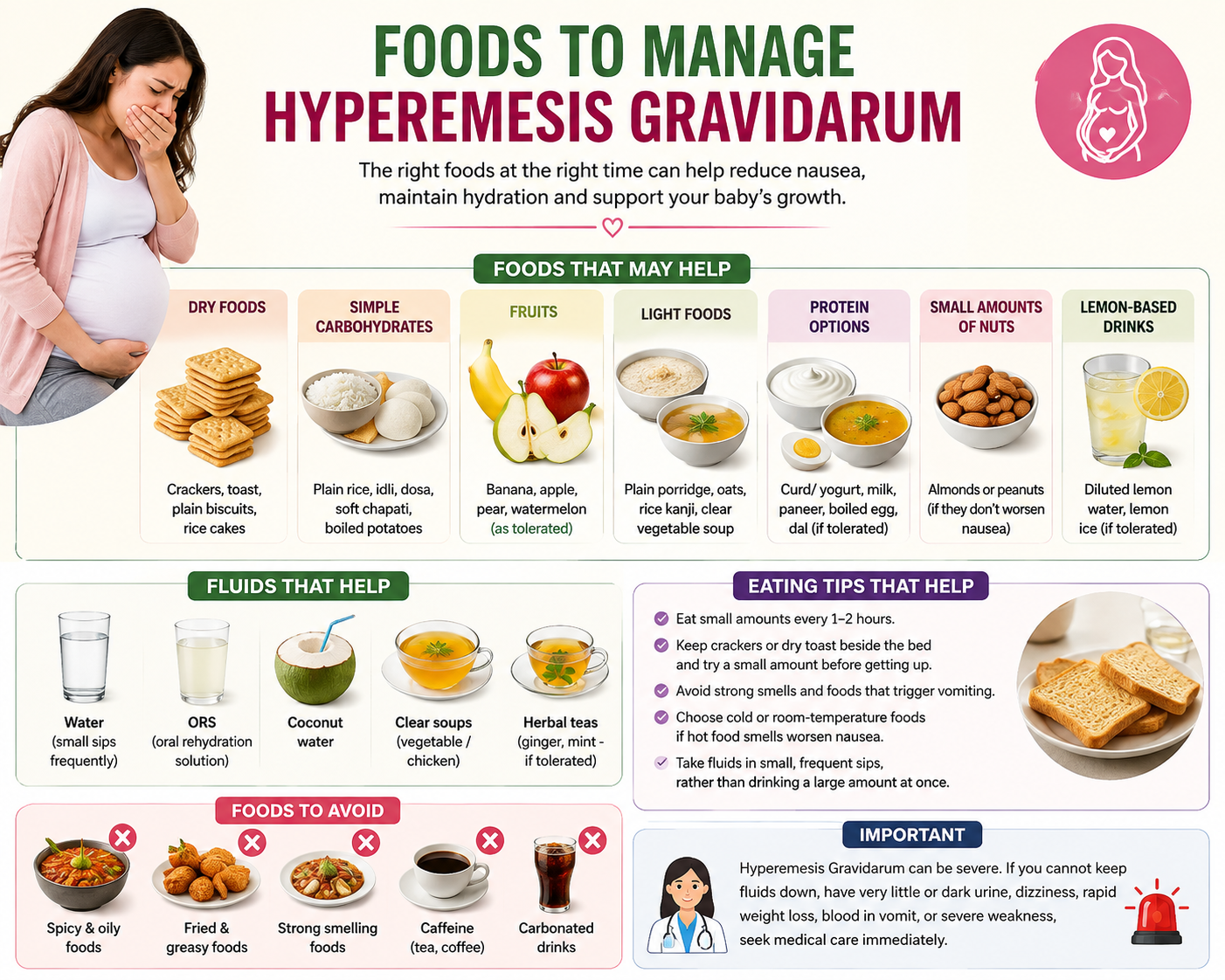
🍞 Dry foods: crackers, toast, plain biscuits, rice cakes
🍚 Simple carbohydrates: plain rice, idli, dosa, soft chapati, boiled potatoes
🍌 Fruits: banana, apple, pear, watermelon—depending on tolerance
🥣 Light foods: plain porridge, oats, rice kanji
🥛 Protein options: curd/yogurt, milk, paneer, boiled egg, dal—if tolerated
🥜 Small amounts of nuts: almonds or peanuts if they don't worsen nausea
🍋 Lemon-based drinks: diluted lemon water may help some people, but avoid if acidity is triggered
💧 Fluids: water, ORS, coconut water, clear soups, and small frequent sips of fluids
Can Hyperemesis Gravidarum be prevented?
There is no guaranteed way to prevent HG. Early diagnosis and prompt treatment can help reduce complications and improve comfort.
Is Hyperemesis Gravidarum dangerous?
It can become serious if left untreated. Severe dehydration, electrolyte imbalance, and malnutrition may affect both the mother and pregnancy. Early medical care is essential.
Will HG last throughout the pregnancy?
Not always. Many women improve after the first trimester, while some may continue to have symptoms for longer.
Will I get HG in my next pregnancy?
There is an increased chance if you've had it before, but every pregnancy is different.
Conclusion
Hyperemesis gravidarum is more than just morning sickness. If you experience persistent vomiting, dehydration, or weight loss during pregnancy, consult your obstetrician promptly. Early treatment can help protect both mother and baby and improve pregnancy outcomes.