0%
Reading Progress
Scroll to track your progress
1. What are teeth aligners?
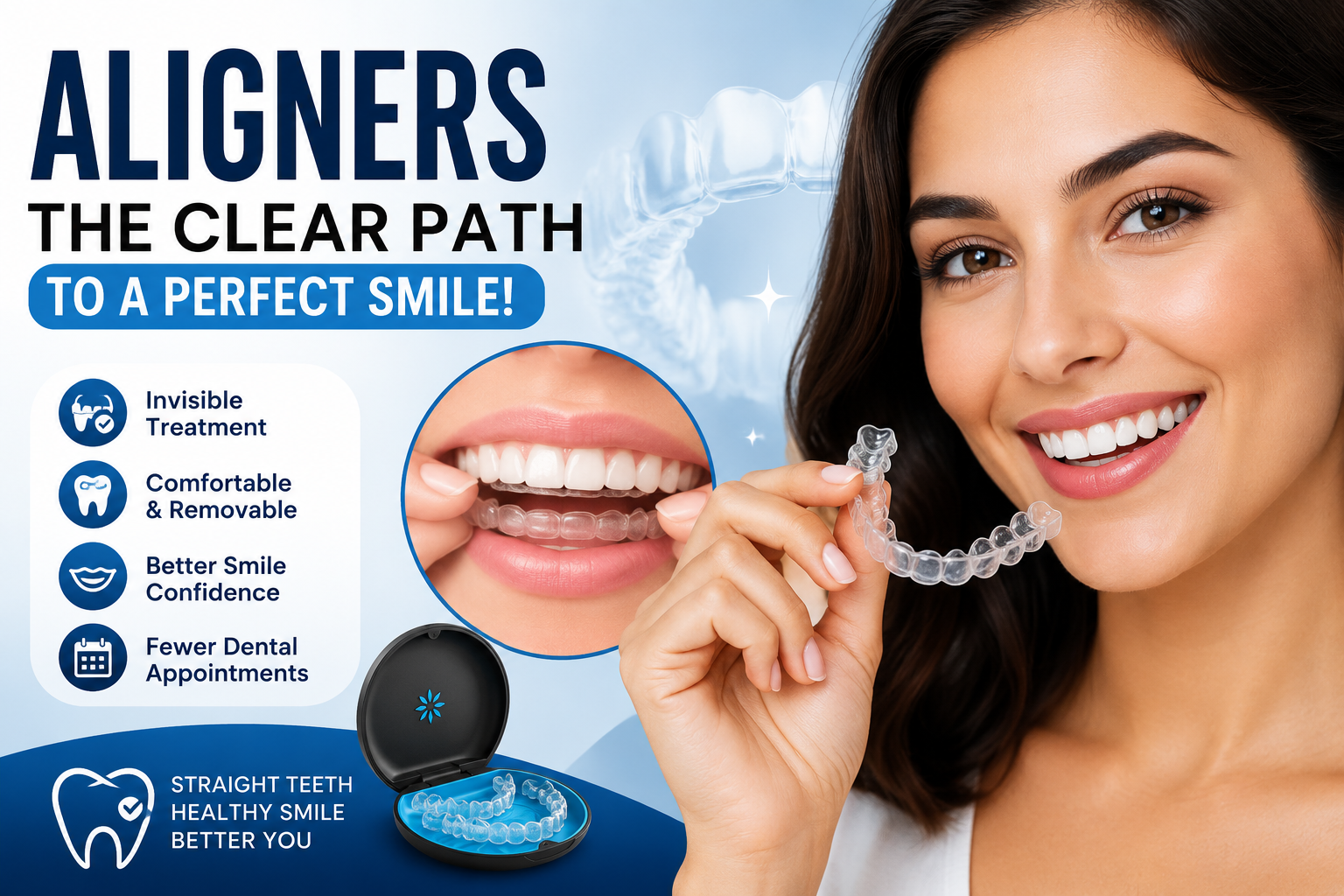
Teeth aligners are clear, removable trays custom-made to gradually move your teeth into their desired positions. They are designed using advanced digital technology and are an alternative to traditional braces.
2. How do aligners work?
Aligners apply gentle and controlled pressure to specific teeth. You receive a series of aligner trays, and each set is worn for a specific period before moving to the next one. Over time, your teeth gradually shift into alignment.
3. Who is a good candidate for teeth aligners?
Teeth aligners can effectively treat:
Crowded teeth
Gaps between teeth
Mild to moderate overbites
Underbites
Crossbites
Crooked teeth
A consultation with an orthodontist or dentist is necessary to determine whether aligners are suitable for your specific case.
Gaps between teeth
Mild to moderate overbites
Underbites
Crossbites
Crooked teeth
A consultation with an orthodontist or dentist is necessary to determine whether aligners are suitable for your specific case.
4. Are aligners better than traditional braces?
Both aligners and braces have their benifits:
Benefits of aligners:
Nearly invisible appearance
Removable during meals
Easier oral hygiene maintenance
Greater comfort with no metal wires
Benefits of braces:
Suitable for complex orthodontic cases
No risk of forgetting to wear them
Often more effective for severe misalignment
The best choice depends on your dental condition and treatment goals.
5. How long does aligner treatment take?
Treatment duration varies based on the complexity of the case. Most patients complete treatment within 6 to 24 months. Minor corrections may take less time, while more complex cases may require longer treatment.
6. How many hours per day should aligners be worn?
For optimal results, aligners should be worn for approximately 20 to 22 hours per day. They should only be removed while eating, drinking anything other than water, and cleaning your teeth.
7. Are teeth aligners painful?
Aligners are generally more comfortable than traditional braces. Some patients experience mild pressure or discomfort when switching to a new set of trays, which usually subsides within a few days.
8. Can I eat while wearing aligners?
No. Aligners should be removed before eating or drinking anything other than water. This helps prevent staining, damage, and bacterial buildup.
9. How do I clean my aligners?
Rinse them with lukewarm water
Brush gently using a soft toothbrush
Use aligner cleaning solutions if recommended
Avoid hot water, which can warp the trays
10. Will aligners affect my speech?
Some people notice a slight lisp when they first start wearing aligners. However, most patients adapt within a few days, and speech returns to normal.
11. Are aligners visible?
Aligners are made from transparent medical-grade plastic, making them much less noticeable than traditional braces. Most people won't notice you're wearing them.
12. How much do teeth aligners cost?
The cost of aligner treatment depends on factors such as:
Complexity of the case
Treatment duration
Brand of aligners
Location of the dental clinic
A dental consultation can provide an accurate estimate based on your specific needs.
13. Do I need regular dental visits during treatment?
Yes. Regular check-ups allow your dentist or orthodontist to monitor progress, make adjustments if needed, and ensure your treatment is proceeding as planned.
14. What happens after aligner treatment is completed?
After treatment, most patients are required to wear retainers to maintain their new smile and prevent teeth from shifting back to their original positions.
15. Are teeth aligners safe?
Yes. When prescribed and monitored by a qualified dental professional, clear aligners are considered a safe and effective orthodontic treatment.
Benefits of Choosing Teeth Aligners
✔ Nearly invisible appearance
✔ Comfortable and removable
✔ Easier brushing and flossing
✔ Fewer dietary restrictions
✔ Customized treatment plans
✔ Predictable results through digital planning
Conclusion
Teeth aligners have transformed modern orthodontic treatment by offering a discreet,comfortable, and effective way to achieve a straighter smile. Whether you're dealing with crowded teeth, gaps, or mild bite issues, clear aligners may be an excellent solution.
The first step is to schedule a consultation with a qualified dental professional who can evaluate your teeth and recommend the most suitable treatment plan for your smile goals.